

Hello Avatar! Welcome to another week of biotech analysis. Today’s commentary, as always on Thursday, focuses on the general market update. This week confirmed the playbook. Biotech can rally and capital can return quickly, but funding is flowing to companies with clean catalysts and tight execution. Secondaries continue to dominate the financing landscape, while IPO activity remains scarce. Investors are rewarding near-term proof and punishing duration risk. In this environment, cost of capital shapes trial design, and clock discipline matters as much as mechanism.
We are now publishing 7x per week according to the following cadence:
Mondays: Stocks
Tuesdays: Biotech
Wednesdays: Podcast
Thursdays: Markets
Fridays: News
Saturdays: Podcast
Sundays: Strategy
We are also publishing unique content on X - be sure to follow up if you are not already @BowTiedBiotech. And to check-out the archive of our work on X you can find it on our website at: BowtiedBiotech.subtack.com/x-articles.
SUBSCRIBE TO PODCAST HERE:
Please help spread the work by subscribing and hitting the share button if you are enjoying content!
Lots to cover this week, let's get started!

Macro Update
The Federal Reserve’s ongoing battle with inflation is once again becoming a central concern for financial markets. Persistent price pressures, elevated energy costs, and uncertainty surrounding the path of monetary policy have complicated expectations for interest rate cuts. For investors, the implications extend well beyond traditional rate-sensitive sectors. Higher interest rates increase the cost of borrowing, reduce the present value of future earnings, and make lower-risk assets more competitive with speculative equities. Few industries are as exposed to these dynamics as biotechnology, where valuations frequently depend on clinical and commercial milestones that remain years away.
For development-stage biotech companies, the cost of capital is particularly consequential. Unlike established pharmaceutical manufacturers, many small-cap biotech firms operate without meaningful recurring revenue, relying instead on equity offerings, licensing agreements, and strategic partnerships to finance clinical development. When interest rates remain elevated, investors generally demand higher returns to compensate for the risks associated with funding these businesses. This creates a difficult environment for companies with limited cash reserves, particularly those facing expensive late-stage trials or commercialization requirements. Even promising clinical data may fail to translate into sustained share-price appreciation if investors anticipate additional financing and shareholder dilution.

The impact also extends to how investors value future drug revenues. A therapy projected to generate substantial sales five or ten years from now becomes less valuable in today’s dollars when the discount rate increases. This disproportionately affects early-stage biotechnology companies, where most of the projected economic value lies far into the future. Meanwhile, companies approaching pivotal clinical readouts, regulatory decisions, or meaningful commercial inflection points may offer a more attractive risk profile, provided their balance sheets can support operations through those milestones. The distinction between scientific potential and financial durability becomes increasingly important in an environment where capital is neither cheap nor readily available.
The latest economic data reinforce that pressure. September consumer prices rose 3.7% year over year, while the Federal Reserve raised its benchmark rate to 3.75%-4.00% in September. A Reuters survey conducted October 16-20 found that 94 of 100 economists expect rates to remain unchanged at the October meeting, but all anticipate another increase in December. For biotech investors, this makes balance-sheet strength, cash runway, and catalyst timing critical considerations heading into 2027. Companies capable of reaching major clinical or regulatory milestones without returning to capital markets may be better positioned than peers facing near-term financing requirements. Conversely, a sustained period of restrictive monetary policy could weigh on speculative valuations, delay development programs, and complicate dealmaking. The broader implication is that strong science alone may not be enough. In an increasingly selective funding environment, the ability to finance that science through commercialization could become a defining factor in biotech market performance.
Introduction
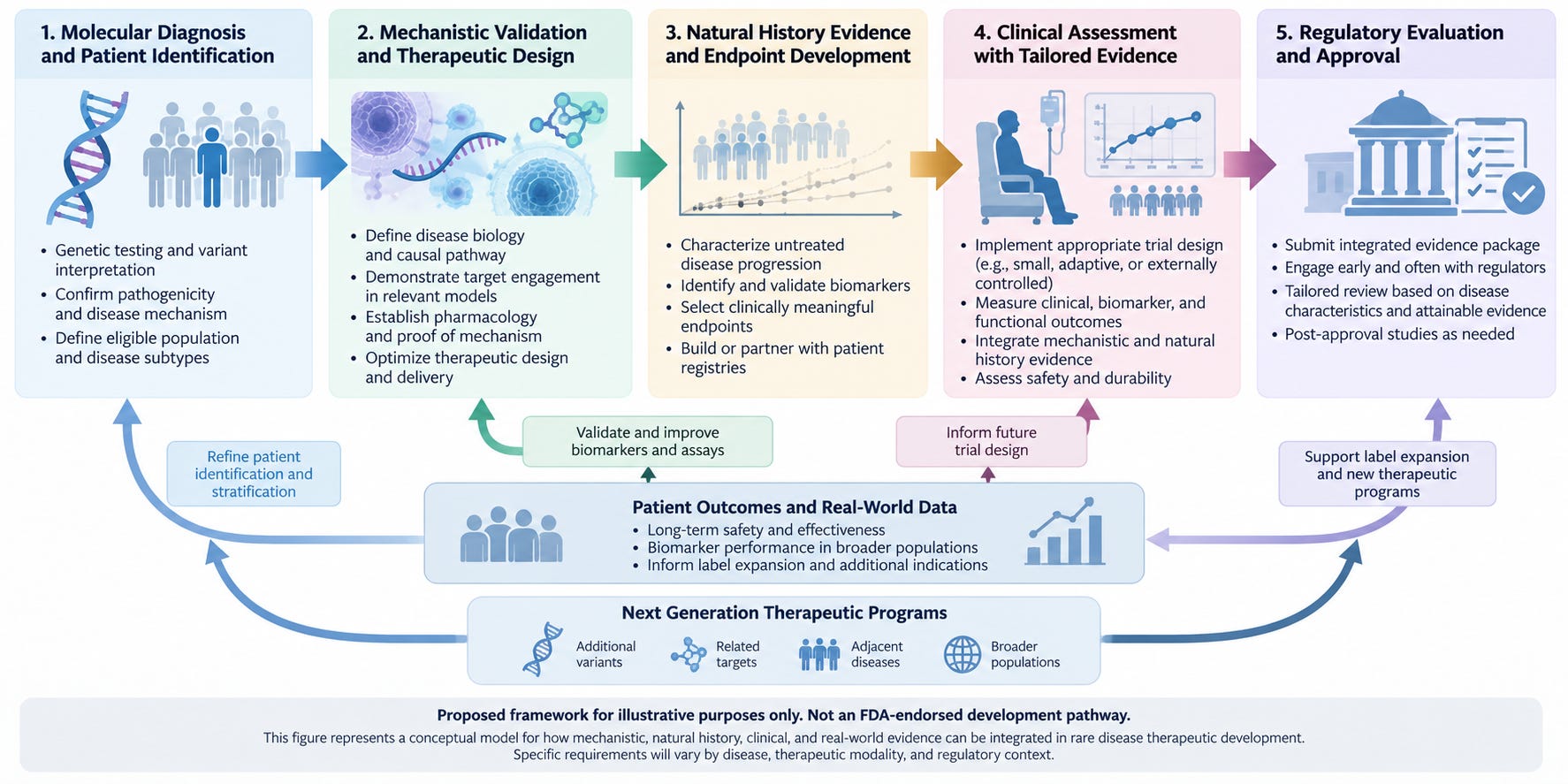
This week, we examine a potentially significant shift in how the FDA approaches rare disease drug development and what it means for the future of translational medicine. The agency’s newly announced Rare Disease Framework Initiative raises an important question for an industry increasingly capable of identifying and targeting highly specific genetic disorders. How do you establish convincing clinical evidence when the patient population is too small to support a conventional trial? We look beyond the regulatory announcement to examine the growing importance of mechanistic evidence, natural history datasets, and individualized therapeutic platforms. More importantly, we consider how these changes could reshape development economics, create opportunities in previously inaccessible indications, and change the way scientists and investors evaluate the next generation of genetic medicines.
The Patients Who Never Had a Trial
Imagine developing a therapy for a fatal genetic disease that affects 40 patients worldwide. You understand the underlying mutation. You have demonstrated target engagement in patient-derived cells, established a plausible mechanism of action, and generated encouraging results in an animal model. The biology looks promising. Then you confront a problem that has nothing to do with the molecule. There aren’t enough patients to conduct the kind of randomized clinical trial traditionally expected to establish efficacy.
This is one of the fundamental contradictions of modern translational medicine. Advances in genomic sequencing have made it increasingly possible to identify the molecular causes of exceptionally rare diseases, yet the clinical development system still relies heavily on methods designed for populations large enough to support conventional statistical comparisons. The more precisely scientists define certain genetic disorders, the smaller the eligible treatment populations become. For some conditions, molecular precision has advanced faster than the regulatory infrastructure needed to translate that precision into approved therapies.
On October 14, 2026, the FDA announced its Rare Disease Framework Initiative, an effort to develop a regulatory system that accounts for the biological and practical limitations of rare disease research. The agency estimates that only approximately 5% of rare conditions have an FDA-approved treatment. Its proposal calls for regulatory decisions tailored to disease progression, patient needs, therapeutic modality, and the evidence that researchers can realistically generate. The initiative remains at an early stage, with a public meeting scheduled for October 28. No new blanket approval standard has taken effect. Still, the language signals a potentially important change in how the FDA intends to evaluate evidence when traditional development methods become impractical.
A Regulatory System Built for a Different Scientific Era
Traditional drug development rests on a reasonable principle. Before exposing large populations to a new treatment, researchers should demonstrate that its benefits outweigh its risks using reliable clinical evidence. Randomization, blinding, prespecified endpoints, and adequate statistical power protect patients from treatments that appear effective because of chance, bias, or flawed assumptions. These safeguards remain essential. The problem emerges when the disease population is too small to support the usual implementation of those safeguards, particularly when patients deteriorate rapidly and treatment delays carry irreversible consequences.
Consider a hypothetical neurological disease caused by a single pathogenic variant. The mutation disrupts a specific protein, producing a measurable biochemical abnormality followed by progressive neurological decline. A therapy that restores the missing protein could produce a compelling chain of evidence from molecular correction to clinical stabilization. Yet a conventional trial might require more participants than exist within the treatable population. Even recruiting a control group presents ethical and logistical difficulties when patients face severe, irreversible deterioration. Researchers can follow every available patient and still lack the statistical power expected from a larger study.
The FDA has already recognized these challenges through existing rare disease programs, including the Rare Disease Evidence Principles initiative and guidance on external controls, natural history studies, and individualized therapies. The new framework builds on those efforts rather than creating flexibility from nothing. What deserves attention is the attempt to make tailored evidence generation a more consistent feature of regulatory review. If implemented effectively, the change would influence which therapeutic programs scientists pursue long before an investigational new drug application reaches the agency.
The Most Important Word in the FDA’s Announcement
One phrase in the FDA’s October announcement deserves more attention than the surrounding discussion of innovation. The agency wants regulatory expectations to reflect evidence that is “reasonably attainable” for a particular disease and population. That sounds administrative. For translational researchers, it raises a much larger question. What constitutes convincing evidence when the ideal experiment cannot be performed?
Historically, developers have often approached regulatory strategy by asking how to adapt their disease population to established trial designs. The proposed framework suggests a more explicit willingness to begin with the characteristics of the disease itself. How quickly does it progress? Can investigators measure the underlying biological defect? Does an established natural history make spontaneous improvement unlikely? Can researchers distinguish treatment effects from ordinary disease variability? These questions determine whether a smaller, more mechanistically informed development program can generate interpretable evidence.
The distinction matters because rare diseases vary enormously in evidentiary difficulty. A rapidly progressive monogenic disorder with a well-characterized biochemical defect offers a different development problem from a heterogeneous neurological syndrome with variable symptoms and uncertain pathophysiology. Treating both conditions under a broad rare disease designation obscures the scientific differences that determine whether a small study can establish a credible treatment effect. A genuinely tailored framework should reward developers who characterize those differences early, while resisting pressure to accept weak evidence simply because recruitment is difficult.
When Mechanism Becomes Part of the Clinical Argument
One of the most consequential developments preceding the new initiative was the FDA’s February 2026 draft guidance on the Plausible Mechanism Framework. The document addresses individualized therapies targeting specific genetic conditions with known biological causes. It describes how developers can assemble nonclinical, clinical, and manufacturing evidence to support regulatory evaluation when conventional development programs are impractical. Importantly, the guidance remains a draft and does not establish that a plausible mechanism alone demonstrates clinical effectiveness.
For scientists, the opportunity lies in constructing a stronger connection between molecular intervention and meaningful patient outcomes. Suppose an antisense oligonucleotide corrects abnormal RNA splicing caused by a specific mutation. Researchers demonstrate restored transcript processing in patient-derived cells, identify the expected protein product, establish drug exposure in the relevant tissue, and observe improvement in a disease-associated biomarker. Each finding supports a different part of the therapeutic hypothesis. Together, they offer a more coherent biological argument than an isolated change in a clinical score. They still leave critical questions about durability, toxicity, and whether molecular correction produces a benefit patients can feel or functionally demonstrate.
This creates an interesting direction for translational development. The strongest programs may increasingly resemble integrated biological investigations rather than conventional clinical trials supported by a collection of exploratory laboratory assays. Mechanistic evidence would need to be designed into development from the beginning, with clear expectations for what each experiment establishes. A biomarker showing target engagement is useful. A biomarker linked convincingly to disease progression is substantially more informative. The distinction between those two measurements could become one of the most important determinants of regulatory success.
The Rise of the Mechanistic Evidence Package
The conventional hierarchy of clinical evidence often places randomized controlled trials at the top, with observational and mechanistic evidence occupying lower positions. That hierarchy works well when randomization is feasible and outcomes can be measured reliably. Extremely rare genetic diseases expose its limitations because no single study may provide enough information to answer every relevant question. The practical alternative is to build a coordinated body of evidence in which independent experiments support a common causal explanation.
Consider a gene replacement therapy for a severe metabolic disorder. Researchers might establish the causal mutation through human genetics, demonstrate restoration of enzyme activity in patient-derived cells, confirm tissue-specific correction in a disease model, and measure a disease-associated metabolite before and after treatment. Longitudinal clinical observations then assess whether changes in the metabolite correspond to altered disease progression. The value of this approach depends on the strength of each connection. An impressive biochemical response does not establish that neurological injury has stopped, particularly when treatment begins after irreversible damage has occurred.
This leads to a forward-looking prediction. Regulatory development teams will place greater emphasis on the quality of the entire causal evidence package, including the reliability of assays, reproducibility across experimental systems, and biological relevance of selected endpoints. Companies that treat translational assays as supporting material assembled shortly before regulatory submission risk discovering that their evidence cannot answer the questions reviewers consider most important. The development advantage will belong to teams that design these experiments together, with the intended clinical claim established before the first patient receives treatment.
Natural History Is Becoming a Strategic Asset
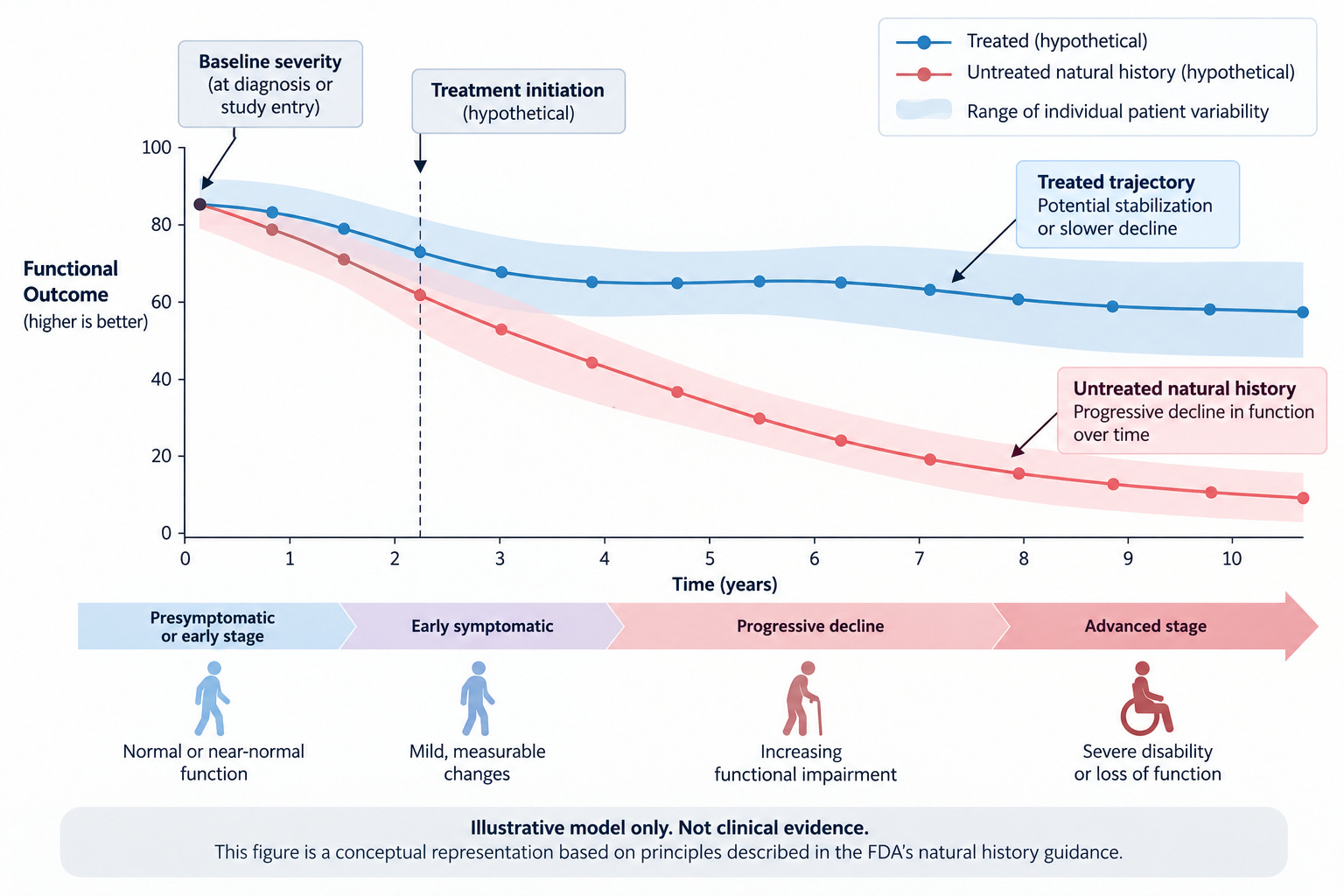
Natural history studies have traditionally received less investor attention than interventional clinical trials. They rarely generate the dramatic announcements associated with pivotal efficacy data, and they do not directly demonstrate that a therapy works. Yet for rare diseases, understanding what happens without treatment can be indispensable. The FDA’s existing guidance recognizes that natural history information is frequently incomplete and that carefully designed observational studies can support endpoint selection and regulatory decisions.
Imagine a progressive childhood disorder in which untreated patients consistently lose a specific motor function between ages four and six. If a treatment stabilizes that function for several years, the result becomes more interpretable when researchers have reliable information about the expected untreated trajectory. The challenge is ensuring that the comparison population resembles the treated patients. Differences in genotype, baseline severity, supportive care, and age at assessment can distort apparent treatment effects. Historical datasets collected using inconsistent measurement methods introduce additional problems. A natural history cohort assembled after promising treatment results emerge also creates opportunities for selection bias.
The overlooked commercial implication is that high-quality natural history datasets may become increasingly valuable components of therapeutic development infrastructure. Disease foundations, academic consortia, and specialized data providers already contribute to this work. A more formal regulatory role for such datasets could support earlier partnerships between drug developers and patient registries. The most valuable resource would not necessarily be the largest database. It would be the dataset with well-defined phenotypes, longitudinal measurements, documented missingness, and sufficiently consistent collection methods to support credible comparisons.
The Control Group That Already Exists
External controls represent one possible response to the enrollment constraints of rare disease trials. Rather than randomizing every participant, researchers compare treated patients with individuals observed outside the interventional study. Those controls can come from historical cohorts, registries, or contemporaneous observational datasets. The FDA already recognizes externally controlled studies as a potential source of evidence, although their suitability depends on the disease, endpoint, and expected treatment effect.
The scientific appeal is obvious. A developer may be able to treat more eligible patients while still constructing a meaningful comparison. But external controls introduce statistical problems that randomization ordinarily helps address. Treatment and control populations can differ in ways that influence outcomes independently of therapy. Disease severity may be recorded differently across institutions. Improvements in supportive care can make modern treated patients appear healthier than historical controls. Statistical adjustment helps when relevant differences are measured accurately. It cannot reliably eliminate bias from variables that were never collected.
A particularly interesting opportunity involves prospectively designed natural history cohorts that use the same outcome assessments intended for future interventional trials. Researchers could establish measurement protocols, define disease subgroups, and prespecify analytical methods before observing treatment results. This would not make the comparison equivalent to randomization, but it would reduce several avoidable sources of uncertainty. For investors, the timing of registry development becomes a useful diligence question. A company that begins collecting natural history data years before its pivotal study has a different evidentiary foundation from one attempting to reconstruct an untreated comparison after a small trial produces encouraging results.
The Hidden Value of Better Biomarkers
Biomarkers are often discussed as tools for accelerating clinical development. In rare diseases, they can determine whether a development program is feasible at all. A measurable biological signal that changes rapidly in response to treatment offers an advantage over a clinical outcome that requires years of observation. This becomes especially important when the available patient population is small and disease progression is slow or variable.
The central problem is interpretation. A biomarker can demonstrate that a drug reached its target without establishing that patients benefit. Researchers must distinguish measures of target engagement from pharmacodynamic indicators, prognostic markers, and surrogate endpoints that predict clinical benefit. These categories carry different evidentiary implications. Tofersen, approved under the accelerated approval pathway for certain patients with SOD1-associated amyotrophic lateral sclerosis, illustrates the regulatory importance of biomarkers while also showing why continued clinical confirmation matters. The FDA’s rare disease educational materials specifically discuss tofersen as a case study in surrogate endpoint use.
The next opportunity may lie in developing biomarkers that connect molecular correction with the timing of irreversible tissue injury. For a neurodegenerative disease, researchers should ask whether treatment changes a biomarker before clinical deterioration becomes measurable, and whether that change predicts later preservation of function. If the relationship is sufficiently strong, earlier intervention becomes easier to justify scientifically. The harder question is whether a given biomarker remains informative across disease stages. A therapy that produces molecular correction in an advanced patient may have limited clinical effect if the relevant neurons have already been lost. Understanding that boundary could improve both trial design and patient selection.
The Problem With Waiting for Symptoms
Many genetic disorders begin producing biological damage long before patients develop recognizable symptoms. By the time clinicians establish a diagnosis, some pathological changes may be irreversible. This creates a difficult situation for therapeutic development. Trials enrolling symptomatic patients offer observable disease endpoints, but those patients may have passed the stage when treatment can produce its greatest benefit.
The Rare Disease Framework Initiative does not explicitly establish a new regulatory pathway for presymptomatic treatment. Nevertheless, a framework that considers disease onset, progression, and attainable evidence creates an opportunity to examine earlier intervention more systematically. In conditions with highly penetrant pathogenic variants and predictable disease trajectories, molecular diagnosis may identify patients before substantial damage occurs. Researchers could then study whether early treatment prevents expected biochemical abnormalities or preserves functions that untreated patients predictably lose. The strength of that argument would depend on reliable genotype-phenotype relationships and an adequate understanding of long-term treatment risk.
This raises a question with significant implications for translational medicine. If a treatment works best before symptoms appear, should developers continue designing their pivotal programs around symptomatic populations simply because those patients offer easier endpoints? In some disorders, that strategy risks underestimating therapeutic potential. Earlier treatment introduces different uncertainties, particularly when genotype does not perfectly predict disease severity. The most promising programs will need evidence that connects genetic risk, biological progression, and treatment timing closely enough to justify intervention before conventional clinical deterioration becomes apparent.
The Smallest Trial May Need the Best Science
There is a tendency to assume that smaller clinical trials are easier to conduct. In rare disease development, the opposite can be true. When a study enrolls hundreds of participants, investigators can sometimes absorb measurement variability through sample size. When only a handful of patients are available, one misclassified diagnosis, inconsistent assessment, or unexpected disease trajectory can materially change the interpretation of the entire dataset.
This makes endpoint precision unusually important. A functional assessment must capture meaningful changes while remaining reproducible across investigators and time points. Composite endpoints can help characterize heterogeneous diseases, but their components require careful justification. A statistically favorable composite can conceal a lack of improvement in outcomes patients consider important. Bayesian methods and other innovative statistical approaches offer additional tools for incorporating prior information and managing limited sample sizes. Their credibility depends on transparent assumptions and sensitivity analyses. A favorable result that disappears when reasonable prior assumptions change is not especially reassuring.
The FDA’s educational materials already include examples involving Bayesian statistics, external controls, and novel clinical endpoints. These case studies suggest that the technical foundations for more tailored development exist today. The challenge is implementation. A smaller trial does not excuse weak measurement or poorly specified hypotheses. It increases the importance of getting those decisions right before enrollment begins.
The Manufacturing Question Nobody Wants to Ask
A therapy can demonstrate convincing biological activity and still fail because its manufacturing process cannot consistently produce a safe, reliable product. This risk becomes particularly important for individualized genetic medicines, where developers may need to manufacture very small quantities for patients with distinct mutations. Traditional pharmaceutical manufacturing benefits from repetition and scale. A process optimized for one patient or a handful of patients faces a different economic and operational problem.
The FDA’s new initiative explicitly identifies risk-based chemistry, manufacturing, and controls review as an area for improvement. This deserves close attention. For individualized antisense therapies, developers can sometimes rely on established chemical processes and accumulated experience with related molecules. For viral gene therapies or genome-editing products, changes in construct design can introduce different questions about potency, delivery, impurities, and safety. A shared manufacturing platform offers potential efficiencies, but similarity between products does not automatically establish comparability. The FDA will still need confidence that each therapeutic product meets appropriate quality standards.
The opportunity is to build manufacturing systems around families of related therapeutic products rather than treating every genetic variant as an entirely independent development program. Standardized analytical methods, validated production processes, and reusable quality documentation could reduce the work required for subsequent candidates. The value would accumulate across programs. This approach is especially interesting for oligonucleotide platforms, where chemical synthesis and analytical methods can sometimes be standardized across sequences. The unresolved question is how much product-specific evidence regulators will continue to require. That boundary will determine whether platform manufacturing becomes a genuine economic advantage or simply a more organized version of existing development costs.
One Disease, Hundreds of Therapeutic Programs
Rare disease classification creates an interesting mismatch between clinical diagnosis and molecular biology. Two patients can share a clinical diagnosis while carrying different pathogenic variants that require distinct therapeutic approaches. Conversely, mutations in different genes can disrupt the same biological pathway, potentially allowing researchers to address multiple conditions through a common intervention. The choice of therapeutic target determines whether a development program serves a handful of patients or a much larger genetically defined population.
For example, some pathogenic variants produce loss of protein function, while others create toxic proteins or abnormal RNA processing. Gene replacement, RNA modulation, and gene editing address different mechanisms. A treatment designed to restore a missing protein may serve multiple loss-of-function variants, whereas a mutation-specific antisense oligonucleotide may only address a small subset. If regulators become more receptive to evidence generated through established therapeutic platforms, the economics of highly specific interventions could improve. Yet a sponsor would still need to demonstrate why findings from one construct are relevant to another. A shared delivery system does not eliminate sequence-specific toxicity or differences in biological activity.
This suggests that the most attractive opportunities may emerge where developers can organize multiple rare disease programs around common molecular mechanisms. Rather than building one company around one exceptionally small indication, researchers could develop a repeatable process for identifying pathogenic variants, selecting therapeutic designs, and establishing pharmacological activity. The resulting business would resemble a portfolio of related development programs supported by common infrastructure. Investors should examine how much of that infrastructure is genuinely reusable. Platform claims are easy to make. Demonstrating that the second or third therapeutic candidate requires less time and capital than the first is considerably harder.
The Economics of Treating Forty Patients
A conventional biotechnology investment model assumes that successful development eventually produces enough commercial revenue to recover research costs and support future investment. That assumption becomes difficult when the eligible population numbers only dozens of patients. Even a clinically transformative therapy can face an unattractive commercial proposition if manufacturing, clinical development, regulatory compliance, and long-term follow-up costs remain high relative to the addressable market.
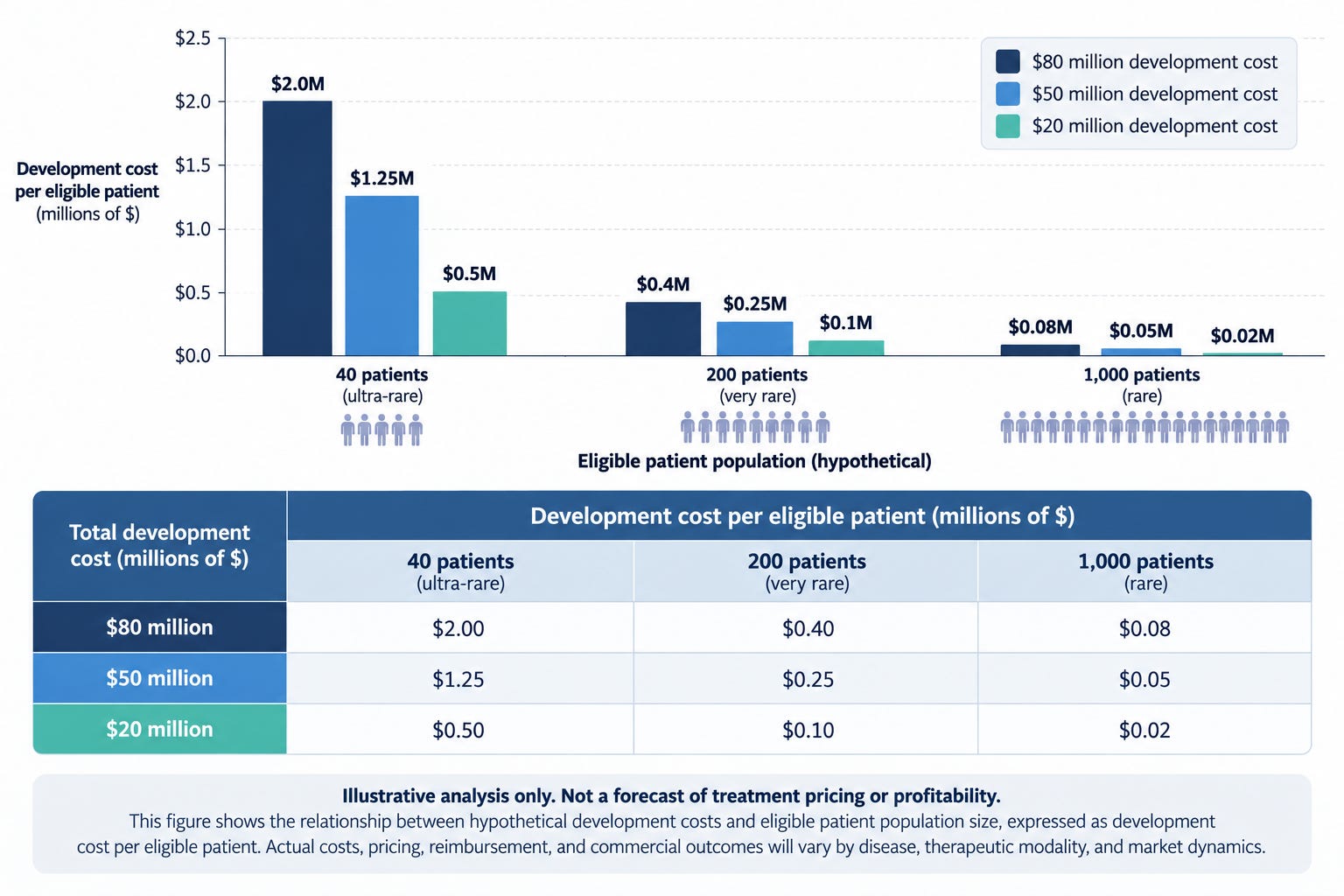
Consider a simplified hypothetical program with $80 million in development costs and 40 eligible patients. Dividing those costs evenly produces $2 million per patient before accounting for manufacturing, commercialization, financing, or ongoing obligations. This is not a proposed treatment price. It illustrates the economic pressure created when development expenses are spread across extremely small populations. Reducing development costs to $20 million changes the calculation substantially, but it does not eliminate the challenge. Patient identification, treatment eligibility, reimbursement, and the timing of revenue collection still determine whether the program is financially viable.
A more flexible regulatory framework could improve these economics by reducing unnecessary development work and shortening the time required to generate adequate evidence. The more interesting possibility involves distributing shared costs across multiple therapies. If a platform supports ten related programs, investments in manufacturing infrastructure, analytical development, and regulatory expertise no longer need to be recovered through one indication alone. That creates an incentive to pursue rare conditions previously considered commercially inaccessible. It also creates a different investment risk. The entire platform can suffer if its underlying technology, manufacturing process, or regulatory assumptions fail across multiple programs.
The New Role of Patient Registries
Patient registries have historically served several functions, including documenting disease prevalence, supporting research recruitment, and helping clinicians understand disease progression. A more tailored regulatory framework could expand their importance. For ultra-rare diseases, the registry may become part of the clinical development infrastructure before a therapeutic candidate exists.
A well-designed registry can identify patients by molecular diagnosis, document baseline disease severity, and collect standardized longitudinal outcomes. If researchers establish these measurements early, they can better estimate progression rates and select endpoints for subsequent interventional studies. This becomes particularly valuable when patients live across multiple countries and receive care through different health systems. Consistent data collection can reduce uncertainty that would otherwise become apparent only after a trial begins. The difficulty is sustaining these efforts over years while maintaining data quality, patient consent, and appropriate governance.
There is also an overlooked competitive implication. Developers that establish relationships with disease communities early may gain access to better characterized populations and more reliable longitudinal evidence. That can improve development planning and accelerate recruitment. However, patient data should not become an exclusive commercial resource that prevents independent research or limits patient choice. Shared standards and appropriately governed access could produce greater scientific value than fragmented proprietary datasets. The companies best positioned to benefit may be those that contribute to durable research infrastructure rather than simply purchasing access to patient records.
The Next Translational Bottleneck Is Diagnosis
A therapy cannot help a patient who never receives the correct diagnosis. For many rare genetic disorders, patients spend years moving between specialists before clinicians identify the underlying cause. Others remain undiagnosed because genomic testing is unavailable, variants are difficult to interpret, or the relationship between genotype and phenotype remains uncertain. These diagnostic delays can undermine therapeutic development even when researchers have identified a plausible molecular target.
Earlier diagnosis becomes more valuable as therapies move toward presymptomatic or early-stage intervention. Newborn screening, broader genomic sequencing, and improved variant interpretation could expand the number of patients identified before irreversible damage occurs. But expanding screening requires more than technical sequencing capacity. Researchers need reliable evidence that a variant causes disease, sufficient understanding of penetrance, and a clinically meaningful intervention. False-positive findings and uncertain genetic results create real consequences for families. Screening programs must also establish how patients will receive confirmatory testing and appropriate follow-up care.
This produces a potentially important feedback loop. The availability of effective therapies strengthens the case for earlier genetic diagnosis, while earlier diagnosis improves the ability to demonstrate therapeutic benefit. A successful treatment program could therefore change the apparent size and characteristics of its own addressable population. Investors often model rare disease prevalence as a relatively fixed number. In practice, diagnosed prevalence can change substantially as testing becomes more accessible and clinical awareness improves. Companies that understand this relationship may identify commercial opportunities that are not visible in conventional epidemiological estimates.
The Regulatory Advantage May Begin Before the IND
One of the more consequential features of the FDA’s existing Rare Disease Evidence Principles process is its emphasis on early regulatory engagement. The process targets certain serious genetic diseases affecting very small populations, generally fewer than 1,000 people in the United States, and contemplates a single adequate and well-controlled study supported by robust confirmatory evidence. Sponsors are encouraged to engage with the FDA before launching pivotal trials. Participation does not guarantee approval, and the statutory standards for safety and effectiveness remain in place.
For developers, early agreement on evidence generation can be economically significant. A company that discovers late in development that its biomarker is insufficiently informative may need additional clinical studies or years of follow-up. A sponsor that identifies those limitations during preclinical development can redesign its translational program before committing substantial capital. The difference can affect financing requirements, development timelines, and the probability of reaching a meaningful regulatory milestone. Regulatory predictability therefore has value beyond the possibility of a smaller pivotal trial.
This creates a practical investment question. How early did management engage regulators about the proposed evidentiary framework, and what specific feedback did it receive? General statements about productive FDA interactions provide limited information. Investors should look for clarity around endpoint selection, natural history requirements, confirmatory evidence, manufacturing expectations, and unresolved regulatory disagreements. A company that can explain those issues precisely has likely developed a more mature regulatory strategy than one relying on broad references to rare disease flexibility.
The Danger of Mistaking Flexibility for Approval
The most important risk in the proposed framework is that developers and investors interpret regulatory flexibility as a reduction in the need for convincing evidence. The FDA’s announcement does not support that conclusion. The agency repeatedly emphasizes maintaining standards for safety and effectiveness while tailoring how evidence is generated and evaluated. The difference matters. A smaller trial with strong mechanistic support can be persuasive. A smaller trial with inconsistent outcomes and poorly characterized patients remains difficult to interpret.
Rare disease history provides reasons for skepticism. Small studies are vulnerable to random variation, selection bias, and exaggerated treatment effects. Biomarkers can improve without corresponding clinical benefit. Natural history comparisons can make treatments appear effective when baseline characteristics differ. Developers also face pressure to advance programs because patients have few alternatives and investors expect progress. These pressures do not disappear under a more flexible framework. They can become more consequential when evidence packages rely on several individually uncertain observations.
The FDA will also face a consistency problem. Tailored review requires scientific judgment, but judgment can vary across reviewers and therapeutic areas. One division may consider a mechanistic dataset persuasive while another requests additional clinical evidence. The initiative explicitly identifies consistency and institutional knowledge as priorities, suggesting that the agency recognizes this challenge. Whether the framework succeeds will depend partly on its ability to establish transparent principles without forcing biologically different diseases into another rigid set of requirements.
A Different Kind of Biotech Company
If the proposed framework produces meaningful regulatory changes, it could influence the structure of biotechnology companies themselves. Traditional development-stage firms often organize around a lead asset, with additional pipeline programs providing optionality. A more platform-oriented model would organize around reusable therapeutic technology, standardized translational assays, and established manufacturing capabilities. Individual diseases would become applications of that infrastructure.
The distinction changes how investors evaluate management execution. Instead of focusing exclusively on the lead candidate’s clinical results, investors would examine whether each successive program becomes easier to develop. Does the company reuse validated assays? Can it apply accumulated safety data appropriately? Does manufacturing become more efficient? Are regulatory interactions producing repeatable development strategies? Evidence of improvement across programs would support a platform valuation more convincingly than the number of candidates listed in a corporate presentation.
The model also introduces a financing challenge. Developing shared infrastructure requires substantial upfront investment before its economic advantages become apparent. Companies may spend years building capabilities that investors cannot easily value. Partnerships with larger pharmaceutical companies, academic institutions, and patient foundations could help distribute those costs. The strongest opportunities may arise where platform developers demonstrate that their infrastructure supports multiple programs with distinct biological targets, rather than relying on the success of one therapeutic candidate to validate an entire business model.
What Investors Should Watch Next
The October 28 public meeting will provide an early indication of how the FDA intends to translate its broad objectives into operational changes. The agency has requested input on attainable evidence, consistency in regulatory requirements, external expertise, and manufacturing considerations. Subsequent guidance documents, internal review procedures, and program-specific interactions will matter more than the initial announcement. Investors should resist assigning immediate valuation premiums to companies simply because they operate in rare diseases. The framework remains under development, and implementation will take time.
Several indicators deserve particular attention over the next 12 to 24 months. First, whether the FDA publishes clearer expectations for combining mechanistic evidence with small clinical studies. Second, whether sponsors begin reporting more specific agreements around external controls and natural history datasets. Third, whether manufacturing guidance enables developers to reuse established processes across related individualized therapies. Each development would provide evidence that regulatory flexibility is becoming operational rather than remaining a policy aspiration.
The most interesting investment opportunities may initially appear outside the obvious therapeutic developers. Specialized manufacturers, assay developers, natural history research networks, and companies providing molecular diagnostics could benefit as more ultra-rare programs become feasible. Their economics will vary considerably, and increased research activity does not guarantee attractive margins. Still, the possibility deserves attention. If development shifts toward smaller patient populations and more individualized evidence packages, the supporting infrastructure will need to become more standardized and efficient. Investors who recognize that demand early may identify opportunities before they become visible through conventional clinical catalyst calendars.
The Future of Translational Medicine
The FDA’s Rare Disease Framework Initiative arrives at an important point in the development of genetic medicine. Scientists can identify pathogenic variants with increasing precision and design therapies against molecular targets that would have been inaccessible a generation ago. The remaining barriers are often less visible. Researchers need reliable ways to connect molecular correction with clinical benefit, understand disease progression, and manufacture treatments economically for exceptionally small populations. Regulatory flexibility can help address some of these problems, but it cannot substitute for the underlying science.
The most consequential long-term change may be a shift toward therapeutic development systems that generate evidence continuously across related programs. A patient registry established for one disease could inform future trials. A validated molecular assay could support several therapeutic candidates. Manufacturing experience accumulated through one individualized treatment could reduce uncertainty for subsequent products. Over time, these shared resources could make the development of highly targeted therapies more predictable and financially sustainable. The model would still require rigorous product-specific evaluation, particularly where differences in sequence, delivery, or biological activity introduce new risks.
For investors, the opportunity extends beyond identifying which rare disease companies receive regulatory flexibility. The more valuable question is which organizations can translate that flexibility into repeatable scientific and commercial advantages. For scientists, the challenge is to design development programs in which every experiment contributes to a coherent understanding of therapeutic benefit. The FDA has opened a discussion that could change how those programs are constructed. Whether it ultimately transforms rare disease medicine will depend on the details that follow. But one possibility is worth taking seriously. Diseases once considered too small for conventional drug development may become increasingly accessible as the scientific and regulatory systems surrounding them improve.
CONCLUSION
Today, the opportunity in rare disease therapeutics extends well beyond the prospect of smaller clinical trials or a more flexible FDA. Advances in molecular biology are making increasingly precise interventions possible, while regulatory frameworks are beginning to confront the practical limitations of evaluating those treatments. The companies that benefit most will need to demonstrate more than promising science. They will need reliable biomarkers, well-characterized patient populations, and development platforms capable of generating convincing evidence without exhausting their financial resources. Important questions remain around regulatory consistency, manufacturing scalability, and whether these therapies can become commercially sustainable for exceptionally small populations. Still, the direction is worth watching. If developers can establish repeatable methods for translating molecular discoveries into meaningful clinical outcomes, rare disease medicine could evolve from a collection of isolated development programs into a more systematic therapeutic field. For scientists and investors, understanding who can build that infrastructure may prove just as important as identifying the next successful drug.
We are now publishing 7x per week according to the following cadence:
Mondays: Stocks
Tuesdays: Biotech
Wednesdays: Podcast
Thursdays: Markets
Fridays: News
Saturdays: Podcast
Sundays: Strategy
SUBSCRIBE TO PODCAST HERE:
Sundays and Mondays are under the paid umbrella, everything else is FREE. It is $11.99/month and we encourage you to support our efforts. It keeps us motivated to keep producing the hybrid science and business biotech focused content you will not find anywhere else all in the same place.
As a reminder, if looking to go deeper into the topics we cover check out our website BowTiedBiotech.com, or DM us on twitter, or email us: bowtiedbiotech@gmail.com
ABOUT BOWTIEDBIOTECH
As a reminder, the purpose of the BowTiedBiotech substack is two-fold. Primarily, we aim to provide our scientist audience the tools to build a biotech company and ultimately translate their ideas into medicines for patients. Secondarily, biotech investors may find this substack useful as we will be providing weekly market updates of the public AND private markets as well as heavily leveraging current financing events as teaching examples.
DISCLAIMER
None of this is to be deemed legal or financial advice of any kind. All updates are sourced from publicly available disclosures. Insights are *opinions* written by an anonymous cartoon/scientist/investor.
Your hypothetical — a fatal genetic disease affecting 40 patients worldwide — is where the piece gets sharpest, because it exposes the quiet assumption that the evidence problem ends at approval. It doesn't. It migrates downstream, and I'd argue it lands on the pharmacist's counter.
A therapy approved on "reasonably attainable" evidence arrives at the pharmacy with thin clinical data and a thick package insert. I'm the one counseling a family on benefit established from a handful of treated patients versus a natural-history cohort, and I'm the one expected to catch the safety signals a 2,000-patient trial would have caught for free.
That's not an argument against the framework — the February 2026 draft guidance on the Plausible Mechanism Framework for individualized therapies is a genuine step forward. But it does mean the integrated-biological-investigation model you describe can't stop at the FDA. Should the framework mandate structured real-world evidence collection after approval, so the mechanistic chain keeps getting tested where the drug is actually used?